Mixing Oil and Water in Outer Space, do that separate into 2 layers?

Mixing Oil and Water in Outer Space, do that separate into 2 layers?

When you pour oil to water in a beaker and shake well, oil droplets will disperse randomly in the water.  After that, let the beaker and the mixture take a rest for a few hours, oil droplets will float to the top and water sink to the bottom and they are separated into 2 layers.  Everybody should know this phenomenon but why is that so? 

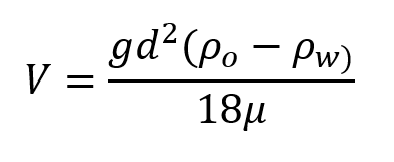
Oil and water are different materials but the key difference to let the oil/water mixture to separate is the density.  The density of oil is around 0.91-0.93 g/cm3 while water is 1 g/cm3.  The density of oil is smaller than water.  Under the same Earth “Gravity”, higher density water is more attracted to the Earth center than the lower density oil.  The rate of the separation can be estimated by Stokes’ Law. (1)
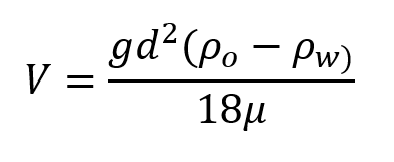
V = Rate of flow of oil droplets

g = Acceleration of gravity

ρo = Density of oil

d = Diameter of the oil droplets

ρw = Density of water

µ = Viscosity of water

As density of oil is smaller than water, the value of ( ρo – ρw) is negative and than the direction of oil droplets is floating up away from Earth centre of gravity.  The larger the difference in the density, the faster the rate of separation. 

Similarly, if we add sand to the water and shake well, the sand particles will suspense in the water evenly.  After rest for few minutes, the sand particles will sink to the bottom forming pellet.  Stokes’s Law is also applicable here.  Density of sand is 2.0 g/cm3 and thus is higher than water.  The value of ( ρs – ρw ) is positive and thus the sand particles will sink towards the centre of Earth. 

Did I say “Gravity”?  Yes, the gravity is the gravitational force acting on the 2 liquids that cause them to separated.  It is same force we are feeling when standing on the Earth surface.  The g value is 9.81 m/s2 on Earth Surface.  How about if we want to separate the same oil/water mixture when we are in outer space where there is no gravity, i.e. g is 0?  From Stokes’ Law, the formula will give V to 0 if g is 0.  This means the rate of separation is zero and thus no separation! 

Can we still separate the oil water mixture in 2 layers in outer space?  Yes, we can!  Use a centrifuge!

Centrifugation is a simple way to increase the rate of separation by increasing the effective gravitational force, hence the g value.  Now the g value is not zero and oil and water separate as on Earth and is much faster!

在外太空混合油和水,會分成兩層嗎?

在外太空混合油和水,會分成兩層嗎?

當你將油倒入燒杯中的水中並充分搖勻時,油滴會隨機分散在水中。之後,讓燒杯和混合物靜置幾個小時,油滴會浮到頂部,水會沉到底部,並分成兩層。這個現像大家應該都知道,但是為什麼會這樣呢?

油和水是不同的物質,但讓油/水混合物分離的關鍵差異是密度。油的密度約為0.91-0.93 g/cm3,而水的密度為1 g/cm3。油的密度比水小。在相同的地球「重力」下,密度較高的水比密度較低的石油更容易被地球中心吸引。分離速率可以透過斯托克斯定律來估計。 (1)

V = 油滴流速

g = 重力加速度

d = 油滴直徑

ρ o = 油的密度

ρ w = 水的密度

µ = 水的黏度

由於油的密度小於水,因此( ρ o – ρ w)為負值,油滴的方向遠離地球重心向上漂浮。密度差異越大,分離速度越快。

同樣,如果我們在水中加入沙子並充分搖勻,沙粒就會均勻地懸浮在水中。靜置幾個分鐘後,沙粒會沉到底部形成顆粒。斯托克斯定律也適用於此。沙的密度為2.0 g/cm3,因此比水的密度高。 ( ρ s – ρ w的值)為正值,因此沙粒將向地球中心下沉。 

我有說過「重力」嗎?是的,重力是作用在兩種液體上導致它們分離的重力。這與我們站在地球表面時所感受到的力相同。地球表面的 g值為9.81 m/s2。如果我們想在沒有重力(即g為0 )的外太空分離相同的油/水混合物,該怎麼辦?根據斯托克斯定律,如果g為 0,則該公式將使V為 0。這意味著分離速率為零,因此沒有分離!

在外太空我們還能將油水混合物分成兩層嗎?我們可以!使用離心機!

離心是一種透過增加有效重力(即g值)來提高分離速率的簡單方法。現在 g 值不為零,油和水像在地球上一樣分離,而且速度更快!

點解抗生素(Antibiotics)只會殺死細菌,卻殺不死病毒?

點解抗生素(Antibiotics)只會殺死細菌,卻殺不死病毒?

抗生素是霉菌及真菌製造的化學武器,對付它們的生存競爭對手,即細菌。這些抗生素只會對細菌有作用,對霉菌及真菌沒有作用,否則自己也死掉了!

細菌細胞是原核細胞,其生理,代謝,繁殖機制及跟真核細胞的真菌,植物及動物,包括人類,都非常不一樣。蛋白質合成是所有細胞最重要的生理活動,核醣體細胞是合成蛋白質的機器。細菌核醣體 (70S) 由兩個亞基 30S 和 50S 亞基組成,真核生物的80S核醣體由一個40S和一個60S亞基組成。抗生素的作用往往就是抑制核醣體亞基 30S 和 50S 亞基的活動,但不會影響核醣體亞基 30S 和 50S 亞基。所以抗生素只會殺死細菌,而對其生物無害。

病毒沒有自身的生理,代謝,繁殖機制,它是透過入侵人類細胞,借用人類細胞的核醣體來合成病毒所需的蛋白質。因為抗生素對人類細胞無效,故對入侵人類細胞的病毒也沒有作用。抗生素對付不了病毒!

如果你感染了新冠病毒或流感病毒, 醫生絕對不會閞抗生素給你的!

#antibiotics #virus #ribosomes #bacteria

Antibiotics only kill bacteria but not they cannot kill viruses?

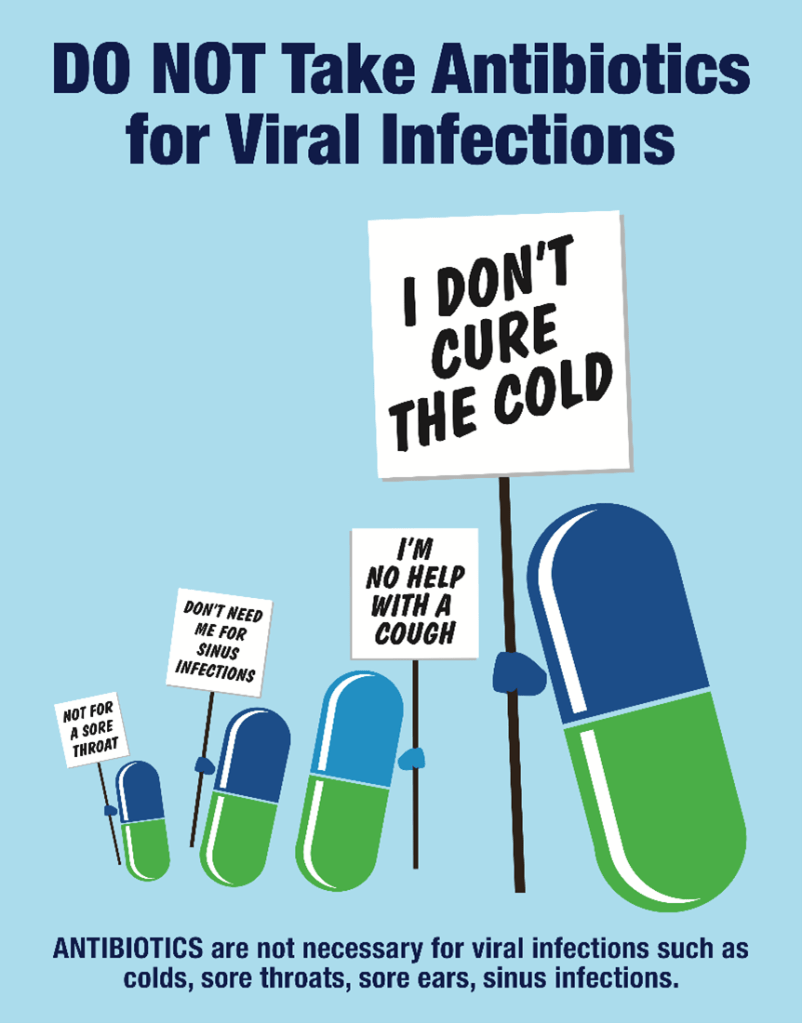
Antibiotics are chemical weapons produced by molds and fungi against their competitors for survival, I.e. bacteria. These antibiotics will only work on bacteria, not molds and fungi, otherwise they will die too!

 Bacterial cells are prokaryotic cells, and their physiology, metabolism, and reproduction mechanisms are very different from those of eukaryotic cells such as fungi, plants, and animals, including humans. Protein synthesis is the most important cell activity of all cells, and ribosomes  are the factory that synthesize proteins. The bacterial ribosome (70S) consists of two subunits, the 30S and 50S subunits, and the eukaryotic 80S ribosome consists of a 40S and a 60S subunit. The role of antibiotics is often to inhibit the activities of the 30S and 50S ribosomal subunits, but does not affect the 30S and 50S ribosomal subunits. So antibiotics only kill bacteria and are not harmful to their organisms.

Viruses do not have their own physiology, metabolism, or reproduction mechanisms. They invade human cells and hijack the mechanism of human cells to synthesize the proteins required by the virus. Because antibiotics are ineffective against human cells, they are also ineffective against viruses that invade human cells. Antibiotics cannot fight against viruses!

 If you are infected with the coronavirus or influenza virus, the doctor will not give you antibiotics!

#antibiotics #virus #ribosomes #bacteria

PCR 是什麼?

COVID-19疫情其間, 全世界的人都做了不少 PCR test, 或稱核酸測試, 那PCR 到底是什麼?

各種生物, 包括微生物, 以致病毒, 都含有DNA 或RNA 作為遺傳物質, 且每種生物的DNA (或RNA) 編碼都不相同, 理論上可以籍檢查病人樣本中的是否含有已知病原體(如流感病毒)的DNA 獨特排序, 確定病人是否受該病原體感染.

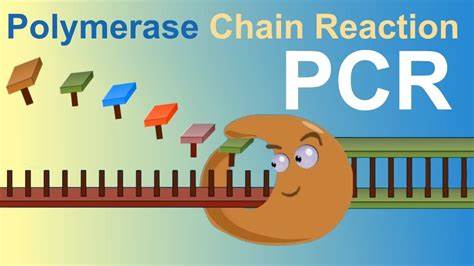
但一般生物樣本所含的DNA 份量太少, 不容易被檢測出來, 且樣本中非目標DNA 干擾也太多了. PCR 全稱Polymerase Chain Reaction, 是利用DNA 雙鍵可複製的特點, 在快速升溫下目標DNA 雙鍵片段會被解開, 快速降溫後, 在DNA聚合酶作用下, 二條分開了的DNA 單鍵會各自合成二條新的DNA 雙鍵, 且排序跟完初目標DNA 雙鍵片段的排序完全一致, 這樣DNA 就被複製了一次. 重複這步驟30至40次, 則該段目標DNA由一變二, 二變四, 四變八, 一路複製出幾百億個相同排序的目標DNA片段, 這數量級的DNA就可以被檢測到了.  所以PCR 就是指數擴增DNA 的方法.

現今科技進步, PCR 方法可以做到快速(幾小時內完成), 實時定量, 操作容易, 成本相對便宜,  樣本量少, 取樣簡便, 準確度高這些優點. 就算像COVID-19病毒不含DNA, 只含RNA, 也可以通過逆轉錄反應 (RT-PCR) 方法擴增及檢測到.  往後可能發展出一次取樣可以同時檢測數十種以致數百種病原體(包括細菌及病毒), 方便醫生準確診斷傳染病, 治療及開藥了!

#PCR

Quantum Dots 是什麼? What are Quantum Dots?

Quantum Dots 量子點是一些半遵體材料,如Silicon, Cadmium Selenide,或 Cadmium sulphide, 其分子大小是在納米級,一般在2 至10 nm 左右。  Quantum Dots 的電子顯微鏡的影像下看到的都是圓點的, 故被名為量子”點” 。

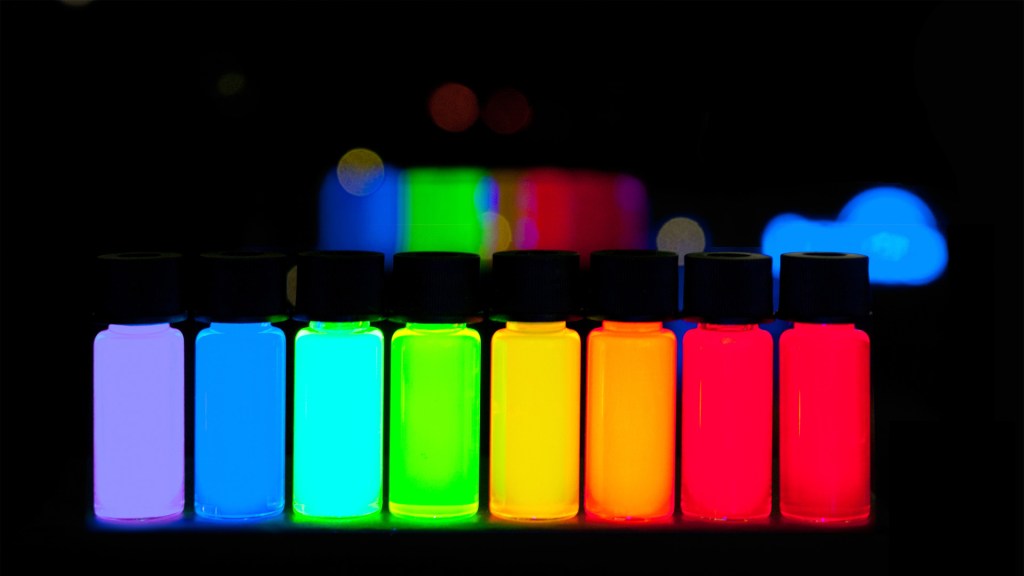
Quantum Dots相對於傳統半導體材料, 其分子量是非常細, 電子結構顯得像一顆很大的原子。價帶和導帶之間的帶隙會因量子點的尺寸而變,分子越細,帶隙則越大,越會發出藍光。相反分子越大,帶隙則越小,越會發出紅光。同一材料在不同分子大小會呈現不同的顏色,我們可以通過微調Quantum Dots分子大小,生成不同的顏色材料,且這些顏色純度非常高。

不同於半導體晶片什麼3nm 製程,製造或生產Quantum Dots 相對容易,在一般實驗室也可以化學合成Quantum Dots,在一些化學品商店也可以買得到。Quantum Dots 的應用也被商業化了,我也剛買隃一台QLED 電視機。

What are Quantum Dots?

Quantum Dots Quantum dots are semi-conducting materials, such as Silicon, Cadmium Selenide, or Cadmium sulphide. Their molecular size is at the nanometer level, generally around 2 to 10 nm. Quantum Dots are all round observed under the electron microscope image, so they are called quantum “dots”.

Compared with traditional semiconductor materials, Quantum Dots have a very fine molecular size and their electronic structure looks like a very large atom. The band gap between the valence band and the conduction band varied depending on the size of the quantum dot. The smaller the dots, the larger the band gap and the blue light will be emitted. On the contrary, the larger the dots, the smaller the band gap, and the red light will be emitted. The same material will show different colors at different dot sizes. We can produce different color materials by fine-tuning the size of Quantum Dots, and the color emitted is very pure.

Unlike the 3nm process of semiconductor wafers, it is relatively easy to manufacture or produce Quantum Dots. Quantum Dots can also be chemically synthesized in general laboratories and can also be purchased in some chemical stores. The application of Quantum Dots has also been commercialized, and I just bought a QLED TV.

mRNA 是什麼?

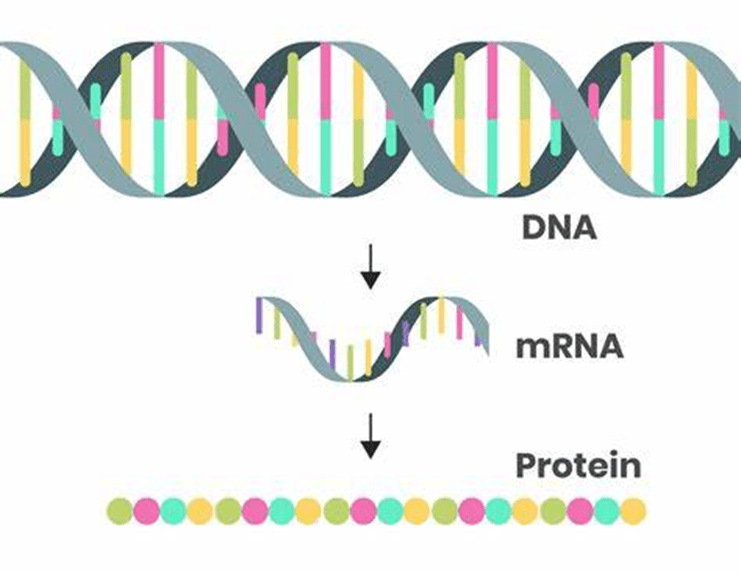
在細胞內,mRNA 的作用有點像電腦中的 RAM。

細胞核內的DNA 是貯存遺傳密碼。 假若細胞需要合成某種蛋白,那染色體中對應該蛋白的那段DNA 雙螺旋會被解開, ,該段DNA的排序便會複製到剛生成的 RNA 上。 這段帶著這段遺傳密碼信息(DNA 排序) 的RNA 就被稱會messenger RNA,簡稱mRNA。

mRNA 會被送到細胞核外的核醣體中,這時細胞質中的tRNA (transfer RNA) 會帶著20種胺基酸到來mRNA 上,按照mRNA 上的排序合成特定排列的蛋白分子。這蛋白分子會再被改良及封裝,再被送到工作地點發揮它的生理作用了。

被解開的DNA 雙螺旋會合上那段mRNA 會被分解成核酸單體,等待下次有另一段DNA 雙螺旋會被解開,再被合成mRNA 及傳送遺傳密碼信息了。

What is mRNA?

In cells, the role of mRNA is a bit like RAM in a computer.

The DNA in the nucleus stores the genetic code. If the cell needs to synthesize a protein, the DNA double helix in the chromosome corresponding to the protein will be unwound. The sequence of DNA will be copied to the newly synthesized RNA. This RNA carrying this piece of genetic code information (DNA sequence) is called messenger RNA, or mRNA for short.

The mRNA will be sent to the ribosome outside the nucleus. After that, the tRNA (transfer RNA) in the cytoplasm will bring 20 kinds of amino acids to the mRNA, and synthesize protein molecules in a specific order according to the sequence on the mRNA. This protein molecule will further be modified and encapsulated, and then sent to the workplace for use of its physiological effect. 

The unravelled double helix of DNA will re-combine. The mRNA will be decomposed into nucleic acid monomers, waiting for the next time another piece of DNA double helix will be unraveled, and then the mRNA will be synthesized and the genetic code information will be transmitted.

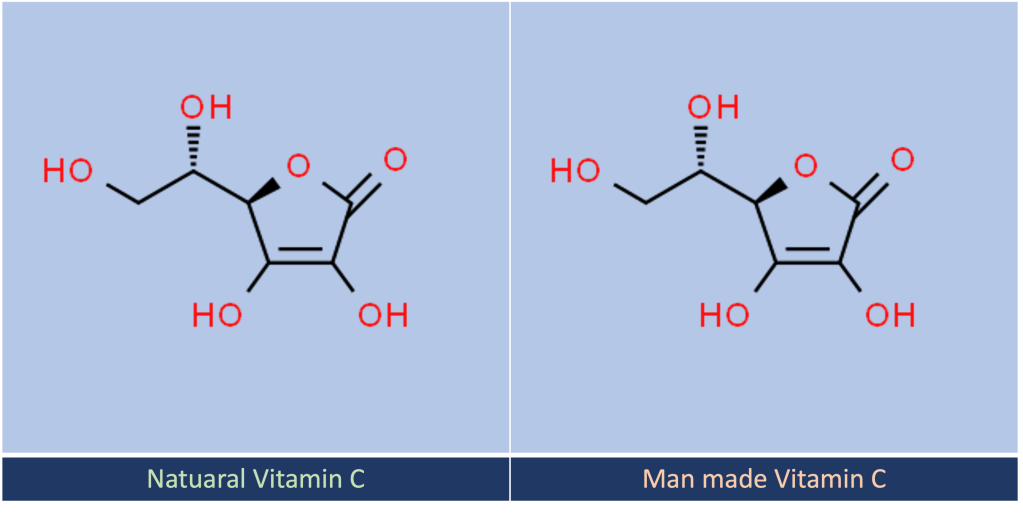
維他命C跟維他命C的分別

“至於合成的維他命C,應當與天然的維他命C完全相同。但是就千分之一的濃度而言,從攻瑰果製造出來的維他命C,當然會與由化學商製造出來的維他命C完全相同。我並非暗示它們之間有什麼重要的差異,只是要提出:按理說來,物質會因必然存在的不純度,而有所差異。”

大師說化學 — 霍夫曼

The Same and Not the Same – Ronald Hoffmann

  • 合成維他命C最先於 1930 年代成功合成
  • 2020 年維他命C 全球產量超過20萬噸